Lower back pain is one of the most common reasons people visit a doctor or miss work.Sometimes it’s just simple muscle fatigue after a long day.Other times, it can be a sign of a deeper problem that needs a spine specialist. Not all back pain is the same.Some pain improves with a bit of rest …


Lower back pain is one of the most common reasons people visit a doctor or miss work.
Sometimes it’s just simple muscle fatigue after a long day.
Other times, it can be a sign of a deeper problem that needs a spine specialist.
Not all back pain is the same.
Some pain improves with a bit of rest and light movement.
Other pain keeps coming back, or starts to affect your daily life and sleep.
In general, muscle strain pain appears after unusual effort, like heavy lifting or long hours standing.
It usually feels better with rest, gentle stretching, and simple lifestyle changes.
You might feel stiffness, but the pain slowly improves over days or a couple of weeks.
More serious causes, like a disc problem or nerve irritation, behave differently.
The pain may travel down the leg, feel like burning or electric shocks, or come with numbness and weakness.
In these cases, the spine and the nerves are more involved than just the muscles.
You should consider seeing a spine specialist if:
- Your back pain lasts more than 2–4 weeks without clear improvement.
- The pain goes down your leg or into your buttock or foot.
- You feel numbness, tingling, or weakness in one leg.
- The pain wakes you up at night or is getting worse over time.
- You have trouble walking, climbing stairs, or standing for long.
There are also red flag symptoms that need urgent medical attention.
These include losing control of bladder or bowel function, severe weakness in both legs, or sudden, intense pain after a fall or accident.
In those cases, you should seek immediate medical care.
A spine specialist will not only ask, “Where does it hurt?”
They will also ask about your lifestyle, work, past injuries, and medical history.
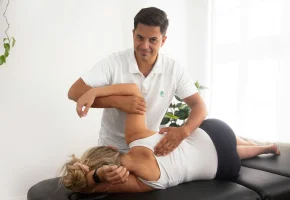
Then they’ll examine your movement, strength, reflexes, and how your nerves respond.
Sometimes, basic treatment and monitoring are enough.
In more complex cases, the doctor may order imaging tests like X-rays or MRI to better understand what is happening inside.
The goal is not to “do more tests,” but to choose the ones that actually guide a safe and effective plan.
Seeing a spine specialist early can help you avoid long periods of uncontrolled pain.
It can also reduce the risk of relying on painkillers alone without treating the real cause.
Often, a mix of guided exercise, posture correction, and targeted treatment gives better long-term results.
If you’ve been living with ongoing lower back pain, you don’t have to accept it as “normal.”
A professional spine evaluation can give you clarity, a plan, and a safer path back to movement and confidence.
Book a Consultation
It’s easy and free!